



A reflection of Vietnam’s ethnic diversity
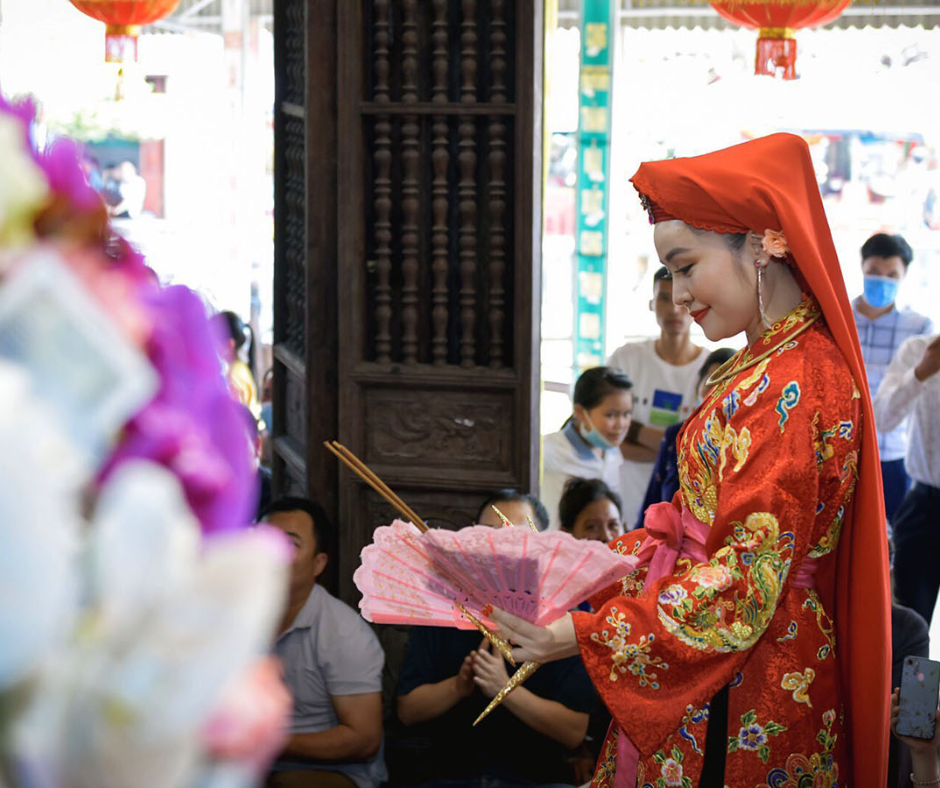
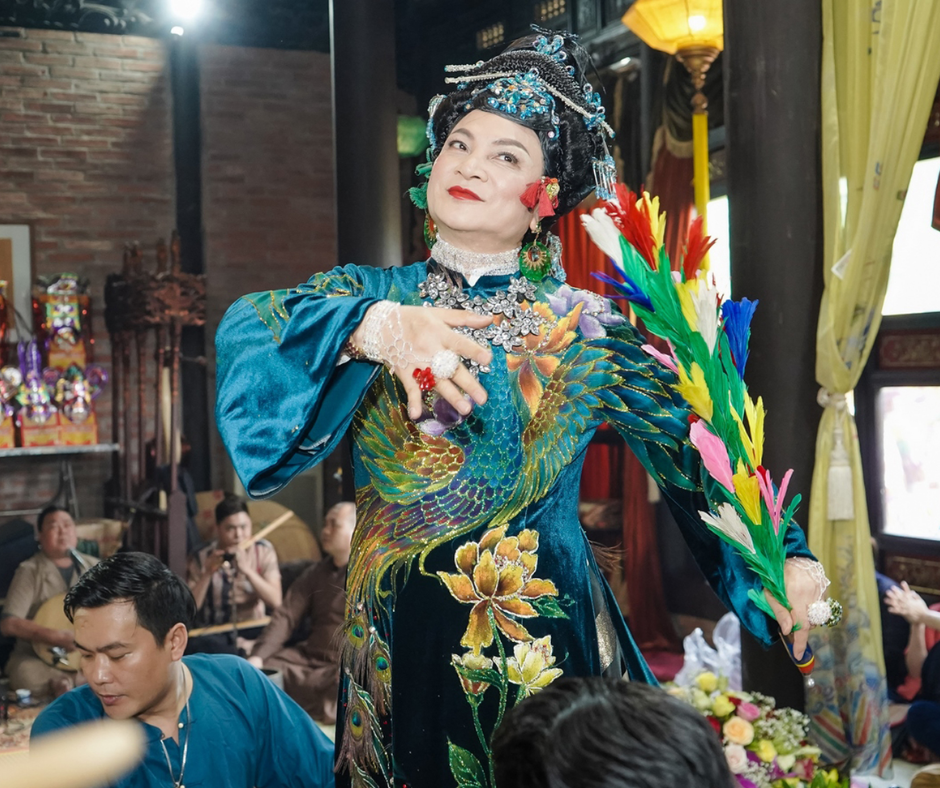
One of the most unique aspects of ‘hau dong’ costumes is how they preserve visual elements from many Vietnamese ethnic traditions.
For example:
- Mountain and forest deities often wear costumes inspired by northern ethnic minority communities
- Delta-origin incarnations may wear traditional ao tu than and carry rural accessories such as shoulder poles
- Royal-inspired incarnations reflect influences from Vietnamese feudal court attire
These visual elements create a living cultural archive of Vietnam’s traditional clothing heritage across centuries.
Jewelry and ceremonial accessories
Alongside the costumes, ritual accessories play an equally important role in the spiritual performance.
Common ceremonial items include:
- Veils and khăn phủ
- Fans
- Embroidered hats and crowns
- Silver jewelry
- Jade ornaments
- Traditional shoes and ceremonial props
The accessories are often handcrafted with intricate embroidery, beadwork, gemstones, and metallic details.
Together, they create the graceful and mystical visual identity that defines the ‘hau dong’ ritual.
The connection between performance and spirituality
The beauty of the costumes enhances the emotional atmosphere of the ceremony, helping participants immerse themselves in the sacred performance space.
Combined with:
- Traditional music
- Chau van singing
- Ritual dance movements
- Incense and offerings
the costumes contribute to a multisensory spiritual experience unique to Vietnamese folk belief culture.
In recent years, cultural researchers and artisans have increasingly emphasized that the essence of ‘hau dong’ lies in spirituality and respect — not extravagance or performance alone.
Preserving authenticity in 2026
By 2026, efforts to preserve traditional ‘hau dong’ costume craftsmanship continue to grow through:
- Cultural heritage workshops
- Traditional embroidery preservation
- Academic research on ritual attire
- Museum exhibitions and folk culture festivals
- Young artisan training programs
At the same time, experts and respected mediums continue encouraging communities to maintain authenticity and avoid excessive modernization that may distort traditional values.
The costumes of ‘hau dong’ are not fashion displays, but sacred cultural symbols rooted deeply in Vietnamese spirituality and identity.
More than ceremonial clothing
The costumes of the ‘hau dong’ ritual are more than colorful garments.
It is a place where visitors can:
- Expressions of faith
- Works of traditional craftsmanship
- Reflections of ethnic diversity
- Symbols of Vietnamese cultural memory
Through every embroidered robe, ceremonial veil, and spiritual performance, the beauty of Vietnam’s Mother Goddess tradition continues to live on across generations.