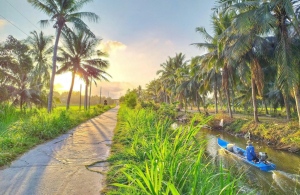

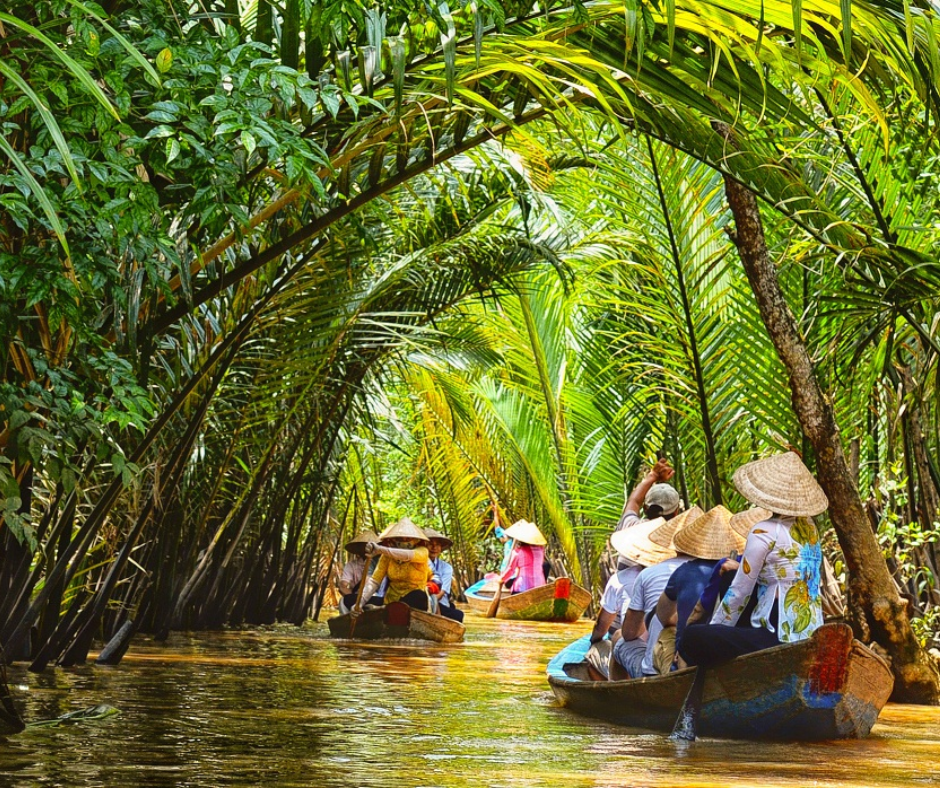
- Traditional villages in Ben Tre, known as the “coconut land”
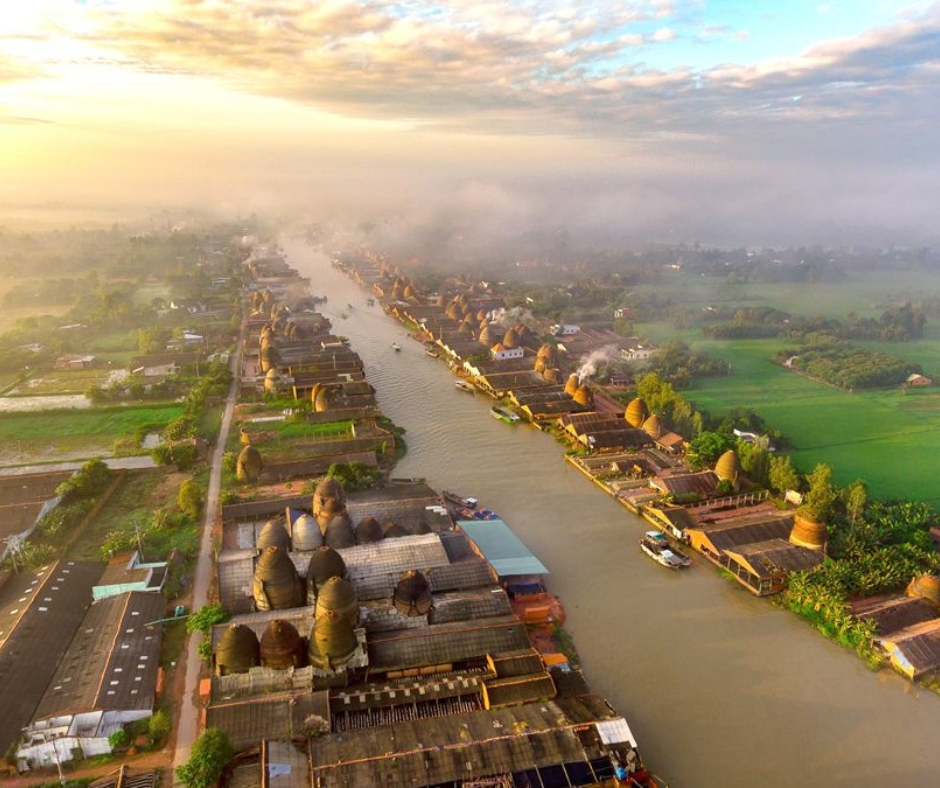
- Peaceful canals lined with nipa palms and fruit orchards
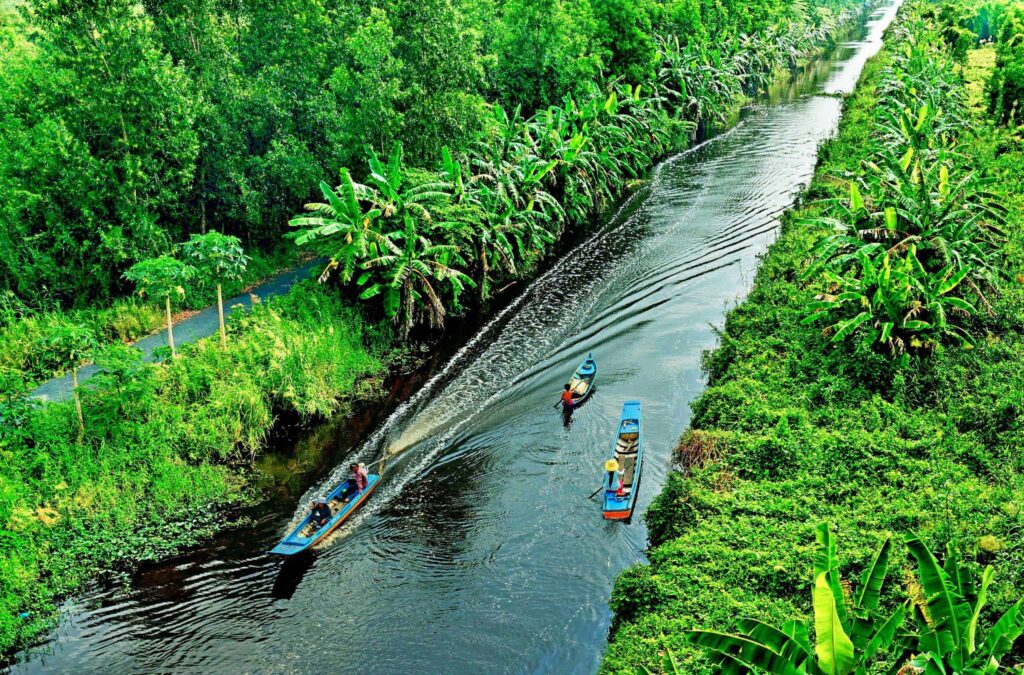
Boats replace roads, and rivers become daily meeting places where locals trade, cook, and live.
It’s not just sightseeing — it’s stepping into a living culture.
Nature at its most diverse
Beyond the waterways, the Mekong Delta is home to rich ecosystems and protected landscapes:
- Tra Su Melaleuca Forest — a serene flooded forest with emerald waterways
- Tram Chim National Park — a sanctuary for rare bird species
- U Minh Thuong National Park — one of the last peat swamp forests in Vietnam
- Can Gio Mangrove Biosphere Reserve — a UNESCO-recognized ecological zone
Updated 2026: Eco-tourism initiatives have been strengthened across the region, focusing on conservation, low-impact travel, and community-based experiences.
A culinary journey of its own
The Mekong Delta is also a paradise for food lovers.
From fresh tropical fruits to river fish and coconut-based dishes, the cuisine reflects the region’s abundance and simplicity.
Local specialties are best enjoyed right where they are made — on boats, in gardens, or at small family-run kitchens.
A perfect escape from winter
With its tropical climate, the Mekong Delta remains warm, sunny, and welcoming year-round — especially appealing to travelers escaping colder regions.
This natural advantage continues to attract international visitors from Europe, Northeast Asia, and beyond in 2025–2026.
More than a destination
The Mekong Delta is not about landmarks or luxury.
It’s about moments:
- A sunrise over the river
- The sound of water against a wooden boat
- A smile from a local vendor at a floating market
The Mekong Delta doesn’t try to impress.
It simply lets you feel — and that’s what makes it unforgettable.