
- Digital guides and multilingual support for international visitors
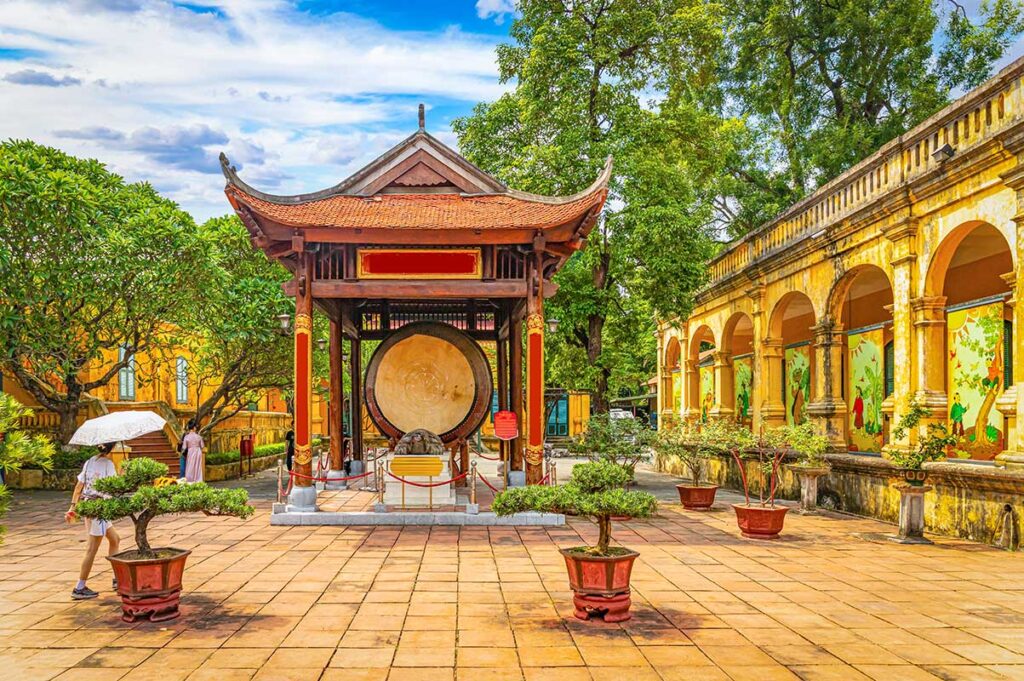
Visitors can now experience the citadel not only as a historical site, but as a living narrative brought to life after dark.
History here is no longer static — it moves, breathes, and speaks.
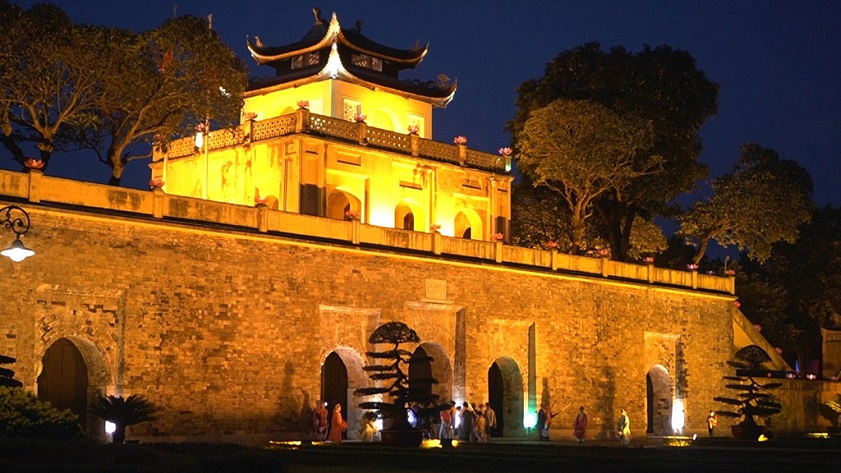
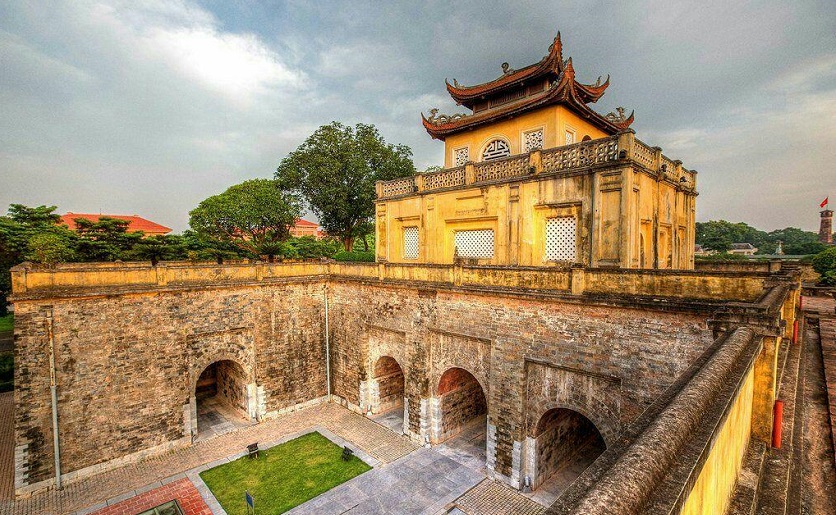
Doan Mon – The ceremonial gateway
Doan Mon marks the main southern entrance to the royal complex.
With its three-arched structure and watchtower design, it once served as the gateway for kings and royal ceremonies.
Archaeological findings beneath the gate reveal layered remains from multiple dynasties — a silent record of time stacked upon itself.
Kinh Thien Palace – The heart of the citadel
At the center lies Kinh Thien Palace, once the most important ceremonial space.
Though the palace no longer stands, its iconic stone dragon steps remain:
- Carved during the early Le dynasty
- Symbolizing royal authority and artistic excellence
This was where emperors held court, welcomed envoys, and conducted sacred rituals.
D67 House – Echoes of modern history
Within the ancient grounds stands D67 Revolutionary House, a powerful reminder of Vietnam’s 20th-century history.
Built in 1967, it served as:
- Headquarters of the Ministry of Defense
- Strategic meeting place during wartime
- Workspace of General Vo Nguyen Giap
The underground bunker still preserves communication equipment and war planning spaces.
A striking contrast between ancient empire and modern resilience.
Archaeological treasures beneath the surface
At nearby excavation zones such as 18 Hoang Dieu Archaeological Site, thousands of artifacts have been uncovered:
- Ancient wells and foundations
- Ceramic fragments and roof tiles
- Decorative elements from multiple dynasties
Spanning over 45,000 square meters, this is one of Vietnam’s largest archaeological discoveries.
It reveals layers of history hidden beneath the city.
Preserving heritage in a modern era (2026 update)
Today, the citadel continues to evolve as a cultural hub:
- Expanded conservation and restoration projects
- Integration of digital exhibitions and AR experiences
- Increased international collaborations in heritage preservation
Hanoi is positioning the site as a leading destination for cultural tourism in Southeast Asia.
More than a historical site
The Imperial Citadel of Thang Long is not just about monuments.
It’s about:
- The rise of a nation
- The continuity of culture
- The resilience of history through time
Walking through the citadel is like turning the pages of a living history book — where every step brings you closer to Vietnam’s past, present, and identity.