
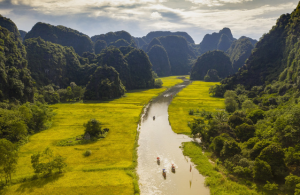
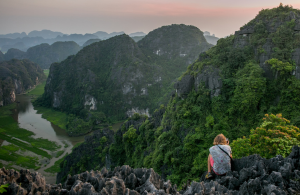

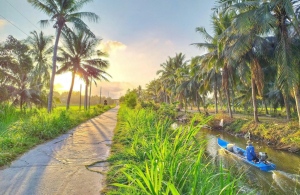

Nghia Lo, located in Vietnam’s northwest region, is a peaceful valley town embraced by rice fields, mountain ranges, and ancient Thai culture. Known as the cultural heart of the Thai ethnic community, Nghia Lo charms visitors with its stilt houses, warm hospitality, mineral hot springs, and vibrant traditional festivals. From terraced landscapes to rhythmic folk dances, Nghia Lo offers a glimpse into an authentic rural world where nature, heritage, and everyday life beautifully intertwine.
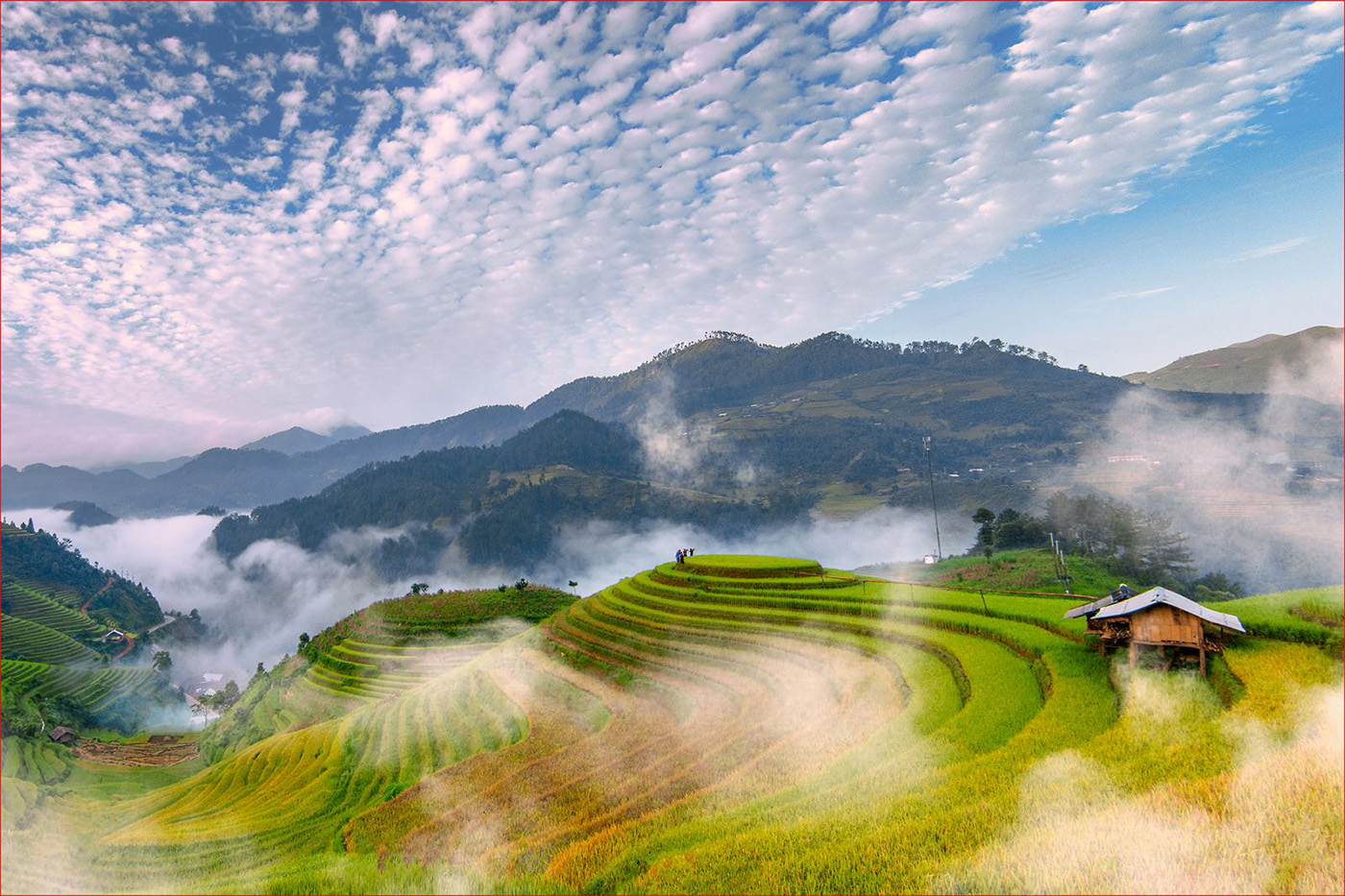
The Best Time to Visit Nghia Lo
The ideal time to visit is from September to November when rice fields turn golden—perfect for landscape photography and cultural exploration.
March to May also offers pleasant weather with mild temperatures (18°C–28°C) and fresh green scenery.
Summer (June–August) can be warm with occasional rain, while winter (December–February) brings cool, misty mornings—light jackets are recommended.
Getting there:
Overland: From Hanoi, you can take a bus or coach to Nghia Lo, which takes around 5–6 hours via the QL32 and QL37 routes.
By motorbike: For adventurous travelers, riding a motorbike from Hanoi offers flexibility and scenic stops along the route. The journey takes approximately 5–6 hours.
By private car: Hiring a private car from Hanoi provides comfort and convenience for families or groups. Travel time is around 5 hours.
By train: The nearest railway station is Yên Bái Station, about 70 km from Nghĩa Lộ. From there, you can take a taxi or local bus to reach the town.
Getting around:
Trekking: Trekking is the best way to explore the rice terraces, local villages, and forested hills. Guided trekking tours are recommended for safety and cultural insights.
Motorbike: Motorbike rentals are common in Nghia Lo and provide a flexible way to explore the surrounding mountains and valleys at your own pace.
Car: Hiring a car with a driver is suitable for families or groups who prefer a comfortable journey around the region.
Walking: The town itself and nearby villages are easy to explore on foot, allowing travelers to interact with local communities and enjoy the natural scenery.
Accommodation:
Homestays: Staying with Thai families in traditional stilt houses offers a unique cultural experience and is ideal for budget travelers.
Guesthouses and hostels: Affordable accommodations with basic amenities are available in the town center, catering to backpackers and small groups.
Hotels: Nghia Lo has several hotels ranging from budget to mid-range, offering comfortable rooms with Wi-Fi, hot water, and sometimes breakfast. Examples include Nghia Lo Hotel and Hoang Gia Hotel.
Resorts: There are a few small resorts on the outskirts, providing a peaceful environment surrounded by rice terraces and mountains. Booking in advance is recommended, especially during peak harvest season.
Must-see attractions:
Mu Cang Chai Rice Terraces (nearby):
Iconic UNESCO-listed terraced fields offering breathtaking panoramic views.
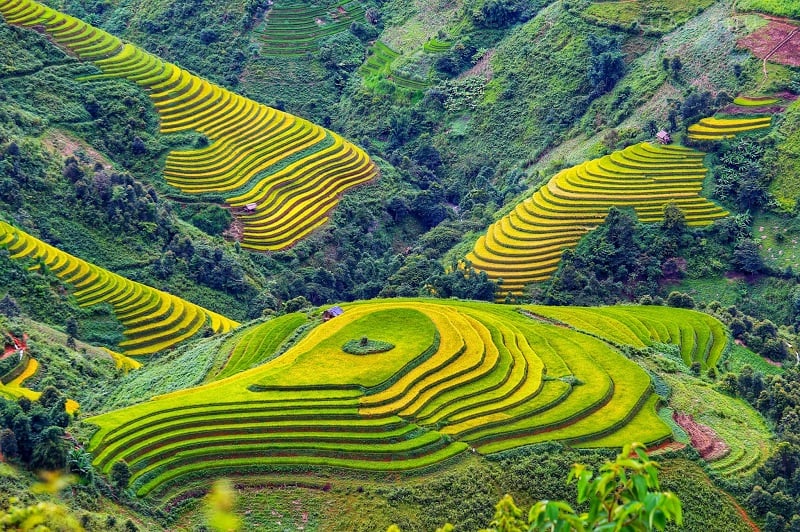
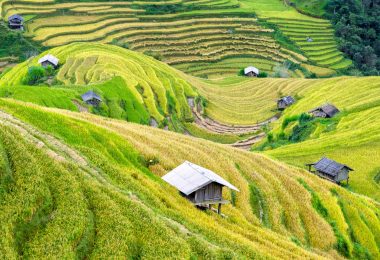
Thái Ethnic Villages:
Explore traditional villages, stilt houses, and local handicrafts.
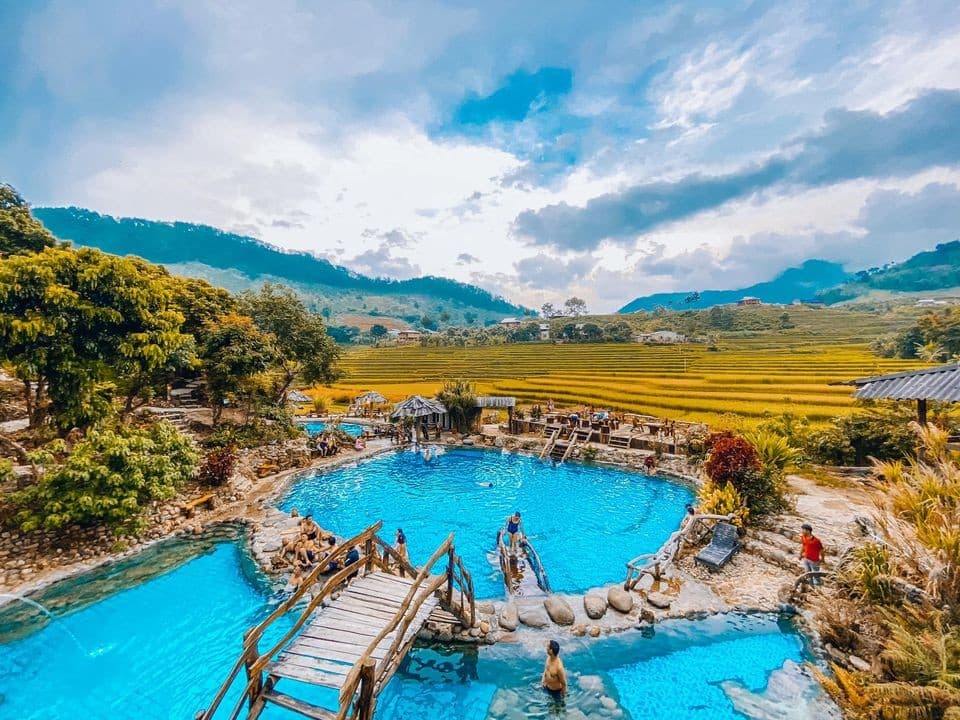
Suoi Giang Hot Springs:
Relax in natural hot springs surrounded by mountains.
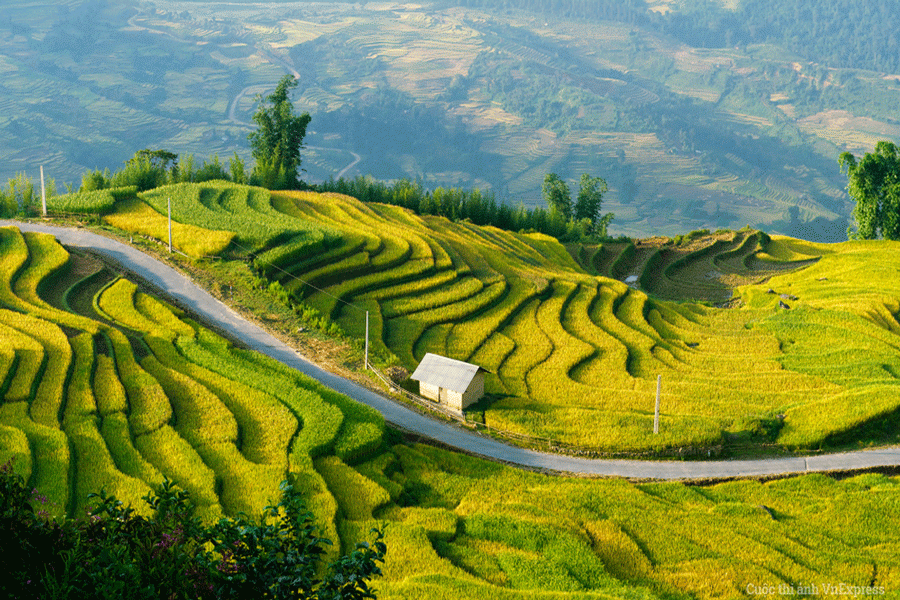
Khau Pha Pass:
Known as one of the most scenic passes in Vietnam, offering panoramic views of Nghia Lo and Mu Cang Chai valleys.
Local Markets:
Visit Nghia Lo Market and nearby rural markets to experience local foods and traditional crafts.
Food & Drink:
Nghia Lo offers authentic northern Vietnamese cuisine with influences from the Thái ethnic group.
Grilled Free-Range Pork is marinated and grilled over an open flame, often served with fresh herbs and rice.
Five-Colored Sticky Rice is a traditional sticky rice dyed with natural plant colors and commonly featured in festivals.
Forest Vegetable Soup is made with fresh wild vegetables cooked in a light, savory broth.
Thang Co is a traditional Thái dish prepared from beef or horse meat, seasoned with local herbs and spices.
Local Corn Wine is homemade and served in small cups, popular during social gatherings.
Fresh Vegetables and Herbs are grown locally and accompany most dishes for added flavor and freshness.
Traditional Northern Noodle Dishes such as Pho and Crab Noodle Soup are widely available at local eateries.
Comprehensive Tips for Travelers:
Plan your trip in advance:
During the rice harvest season, accommodations and tours can fill quickly. Book early to secure your preferred options.
Pack for varying weather conditions:
Layered clothing is recommended, as mornings can be cool and afternoons warm. Good walking shoes are essential for trekking.
Hire a local guide:
Guides can provide insights into Thái culture, explain local customs, and help you navigate rural trails safely.
Respect local customs:
Dress modestly, especially when visiting villages, and ask permission before taking photos of people or homes.
Transportation tips:
Motorbikes are convenient for exploring nearby villages and terraces, but be cautious on steep or winding mountain roads. Always carry water and snacks for long treks.


