
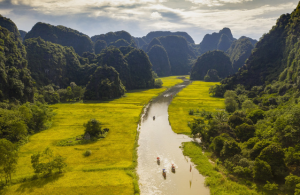
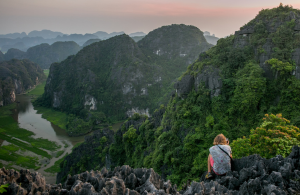
Ha Giang, located in Vietnam’s northern frontier region, is famed for its dramatic limestone mountains, terraced fields, winding passes, and vibrant ethnic cultures. As the gateway to the Dong Van Karst Plateau UNESCO Global Geopark, the province offers untouched beauty, frontier landscapes, highland heritage, and nomadic-style adventure. Travelers seeking raw nature, photography, immersive culture, and scenic motorbike journeys increasingly choose Ha Giang as one of Vietnam’s most remarkable destinations.
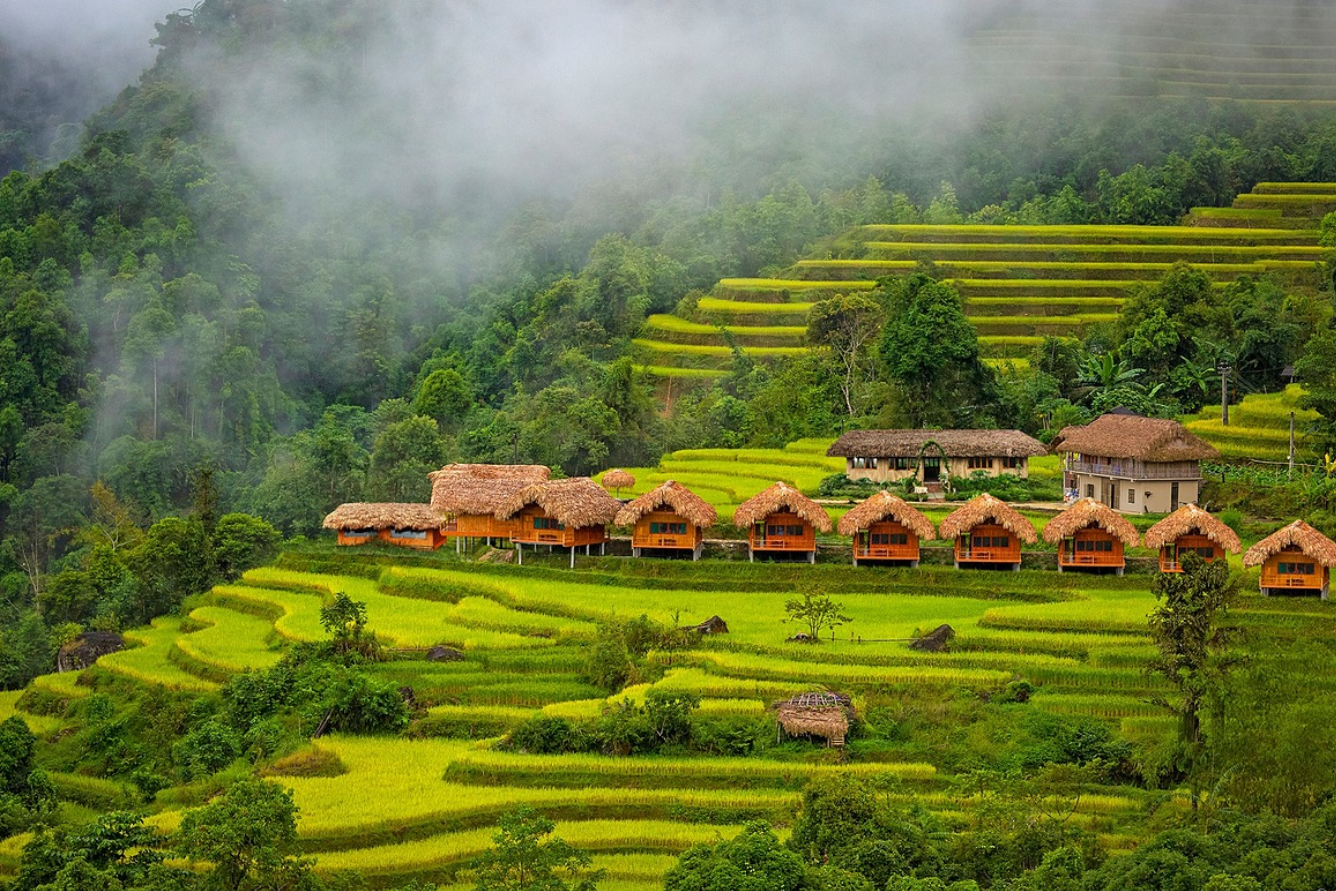
The Best Time to Visit Ha Giang
Ha Giang’s climate varies by season:
September to November is ideal, featuring cool weather, clear skies, and blooming fields of buckwheat flowers.
March to May brings pleasant temperatures and blooming peach and plum blossoms.
December to February is cold, especially in high-altitude areas where temperatures may dip below 10°C, so warm clothing is essential.
Getting there:
Overland (Bus or Car Transfer): Sleeper buses from Hanoi to Ha Giang are the most common option, taking about 6–7 hours. Travelers then continue by motorbike or car to Dong Van, Meo Vac or Hoang Su Phi.
By Motorbike: Suitable for experienced riders seeking adventure, especially on challenging passes such as Ma Pi Leng or Tham Ma Slope.
By Private Car: Ideal for families or groups wanting comfort and flexibility, with the ability to stop at scenic viewpoints like Quan Ba Heaven Gate or Lung Cu Flag Tower.
Getting around:
Motorbike: The most common and flexible mode for exploring remote villages, passes, and viewpoints. Recommended for travelers with riding experience.
Car/ Private Transfer: Suitable for groups or those seeking comfort and safety while visiting key attractions across Ha Giang.
Local Bus/ Shuttle: Shared vans and buses connect Ha Giang City with districts such as Dong Van, Yen Minh, and Meo Vac, offering an economical option.
Walking: Well-suited for villages, rice terrace areas, and scenic valleys such as Hoang Su Phi and Dong Van.
Accommodation:
Ha Giang’s stay options range from ethnic homestays to boutique retreats:
Homestays: Located in mountain villages such as Dong Van, Meo Vac and Hoang Su Phi, offering cultural interaction and rustic charm.
Guesthouses and Hostels: Affordable and social options located mostly in Ha Giang City, Dong Van, and Meo Vac, suitable for budget-conscious travelers.
Hotels: Provide basic to mid-range services with modern facilities, many featuring mountain views and convenient access to transport hubs.
Resorts and Eco-lodges: Ideal for travelers seeking comfort, scenic settings, wellness services, and cultural ambiance, often located near terraced fields or river valleys.
Must-see attractions:
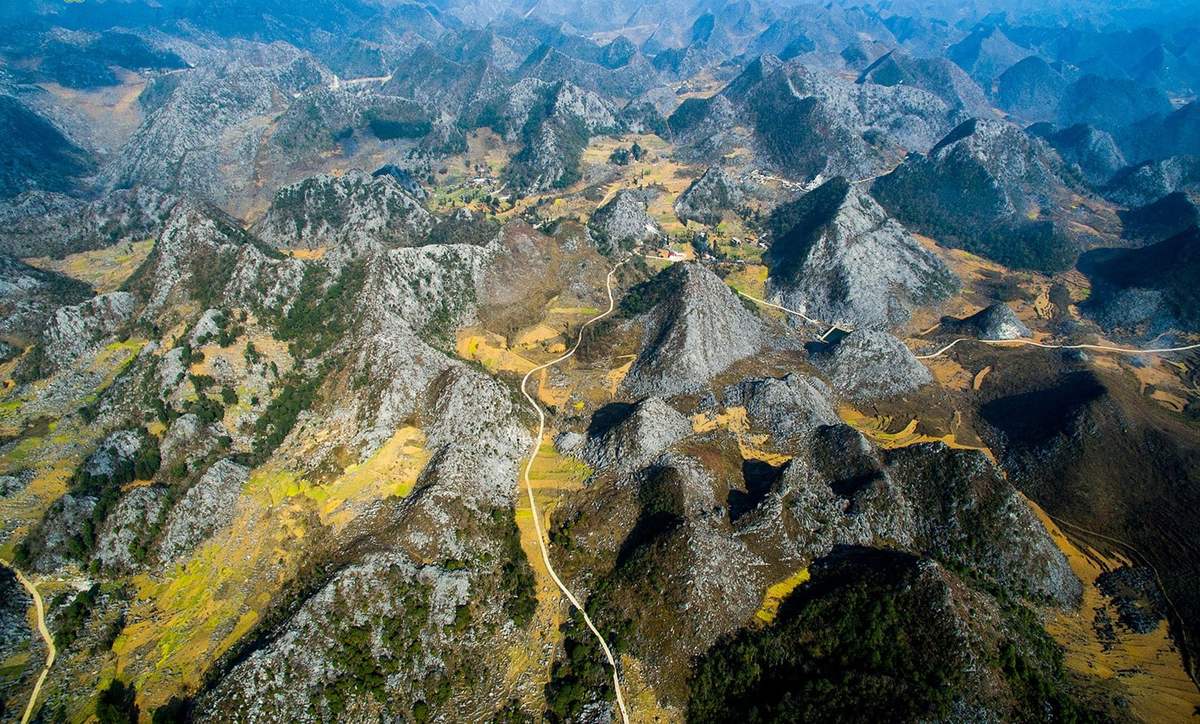
Dong Van Karst Plateau Global Geopark:
A UNESCO-recognized geological treasure featuring vast limestone mountains, deep valleys, ancient rock formations, and traditional ethnic settlements.
Ma Pi Leng Pass:
One of Vietnam’s most spectacular mountain passes, offering breathtaking views over the Nho Que River and Tu San Canyon, Southeast Asia’s deepest canyon.

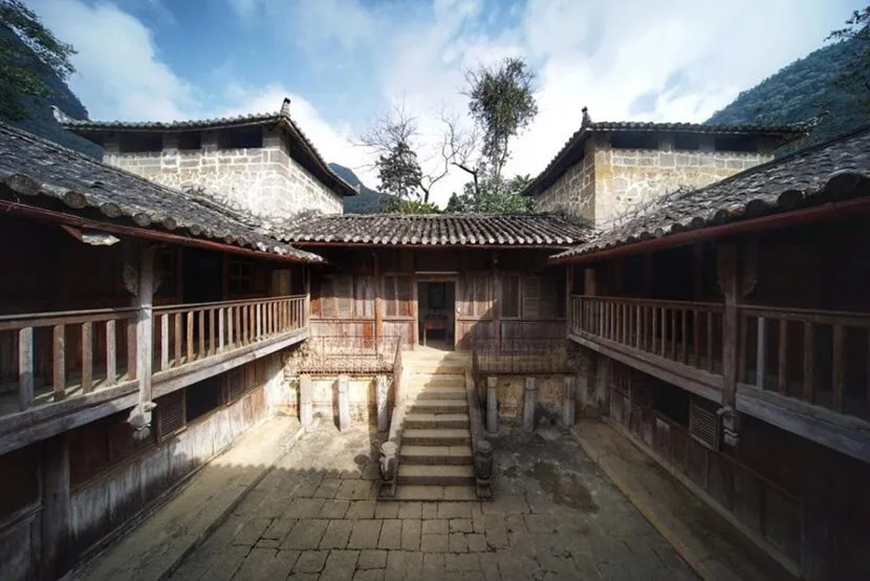
Hmong King’s Palace (Vuong Palace):
A historic residence from the early 20th century, showcasing unique stone and wood architecture reflecting Hmong royal heritage.
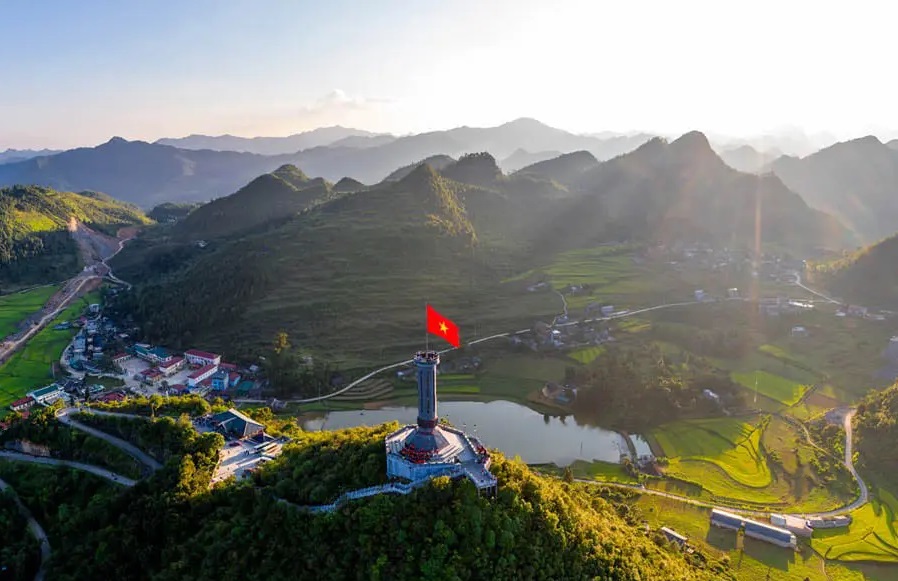
Lung Cu Flag Tower:
A symbolic landmark marking Vietnam’s northernmost point, with panoramic views over terraced hills and border landscapes.
Quan Ba Heaven Gate & Fairy Peaks:
A scenic mountain gateway overlooking the Tam Son valley, famous for the twin limestone hills known as the Fairy Peaks.
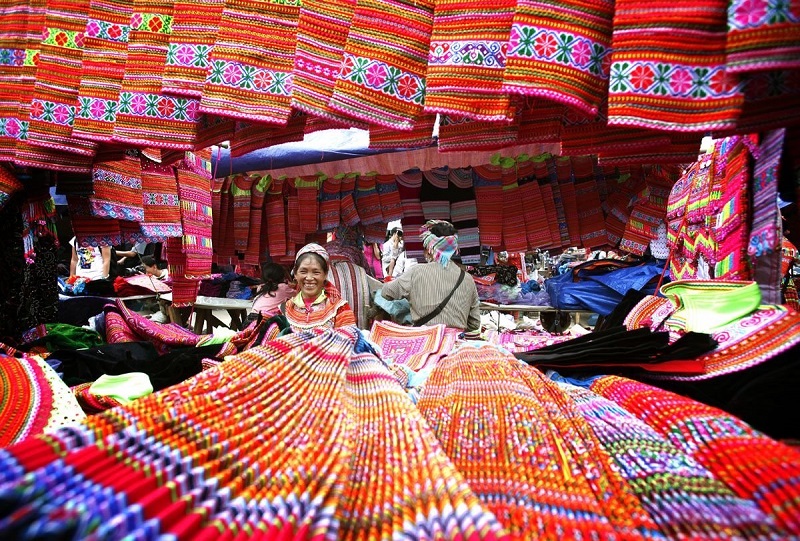
Dong Van Old Quarter & Sunday Market:
A preserved stone town where ethnic minorities gather weekly to trade handicrafts, local food, livestock, and agricultural products.
Hoang Su Phi Terraced Fields:
Among Vietnam’s most impressive rice terraces, especially stunning during harvest season, ideal for trekking and photography.

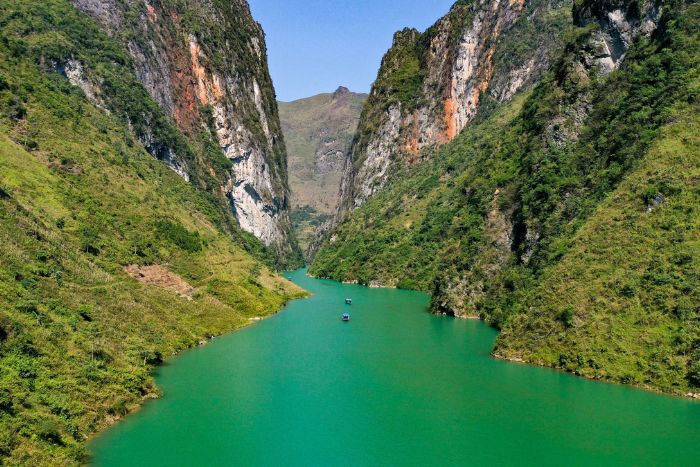
Nho Que River & Tu San Canyon:
A signature boat journey through emerald waters beneath towering canyon walls, accessible from docks near Ma Pi Leng Pass.
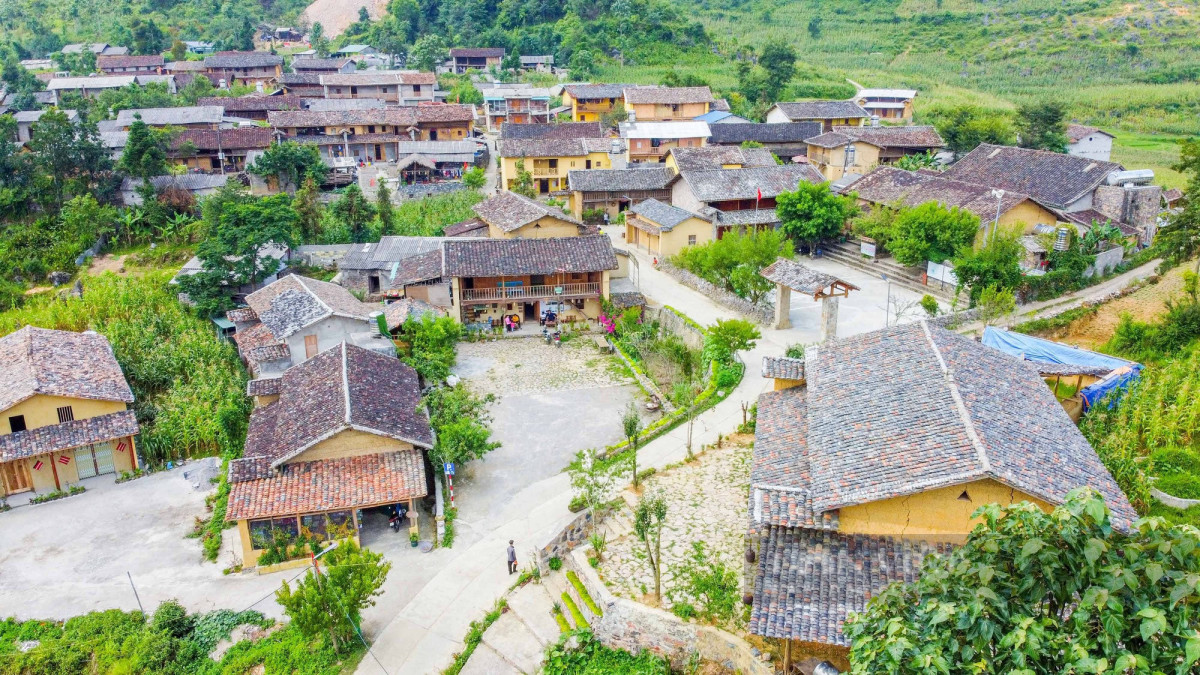
Lo Lo Chai Village & Pa Vi Community Village:
Ethnic villages offering authentic cultural experiences, traditional architecture, and insights into highland lifestyles.
Food & Drink:
Ha Giang’s cuisine reflects its ethnic diversity, mountain environment, and agricultural heritage. Signature specialties include:
Buckwheat cakes, made from ground buckwheat flour, steamed or grilled and served warm with honey or sesame, commonly enjoyed during buckwheat bloom season.
Corn wine, a household brewed spirit made from fermented maize, typically shared during celebrations or meals.
Smoked buffalo or pork, preserved over fire in mountain kitchens, offering bold smoky flavors unique to upland communities.
Black chicken hotpot, prepared with medicinal herbs believed to promote warmth and health, especially in cold seasons.
Sour pho (pho chua), a northern highland dish featuring noodles mixed with pickled vegetables, peanuts, herbs, and sweet-sour sauce.
Dong Van egg rolls, thin rice sheets wrapped around seasoned egg filling, served with broth for breakfast.
Men men (steamed corn meal), a staple among Hmong households served alongside meat and vegetable dishes.
Five-color sticky rice, naturally dyed using forest plants and often served during festivals.
Au tau porridge, a unique local porridge made from au tau roots (processed for safety), ginger, pork, and herbs; traditionally consumed for warmth and recovery.
Visitors can explore these dishes at Sunday markets, evening food streets, homestay dinners, town eateries, and breakfast stalls throughout Dong Van, Meo Vac, Hoang Su Phi, and Ha Giang City.
Comprehensive Tips for Travelers:
Plan your trip in advance:
Popular seasons like buckwheat blooming and rice harvest attract high visitor demand. Booking transportation, accommodation, and motorbike rentals early ensures availability—especially in Dong Van and weekends when local markets take place.
Pack for varying weather conditions:
Temperature shifts occur throughout the day, with colder air in mountain zones. Bring layered clothing, sturdy trekking shoes, rain protection, sunscreen, scarves or light jackets for evening winds, and a camera for scenic stops.
Hire a local guide:
A local guide enhances cultural understanding, helps navigate remote mountain trails, and connects travelers with ethnic experiences in villages like Lo Lo Chai or Pa Vi. Guides also ensure safety on steep passes and can recommend the best viewpoints and dining stops.


