





Standing as a thunderous masterpiece of the Central Highlands, Dray Nur Waterfall is more than just a scenic stop in Dak Lak Province; it is a living symbol of Ede culture and the raw, untamed power of Vietnamese nature.
Located about 25km south of Buon Ma Thuot city, Dray Nur is part of a legendary trio of waterfalls on the Serepok River, alongside Dray Sap and Gia Long. Often called the "Wife Waterfall," it offers a poetic yet powerful experience for those venturing into the heart of the red basalt soil region.
The Legend of Eternal Love
In the local Ede language, Dray Nur translates to "Female Waterfall" or "Wife Waterfall." According to local lore, the waterfall was born from a tragic love story. Centuries ago, a young couple from two different villages fell deeply in love, but their families were bitter enemies. Unable to bridge the divide between their tribes and desperate to be together, they threw themselves into the Serepok River. In a moment of grief, the heavens caused a great storm that split the river into two branches—the Krong No (Father River) and Krong Ana (Mother River)—creating the Dray Sap and Dray Nur waterfalls. Locals believe the roaring sound of the water is the girl’s voice, forever whispering her story to the forest.
A Natural Masterpiece
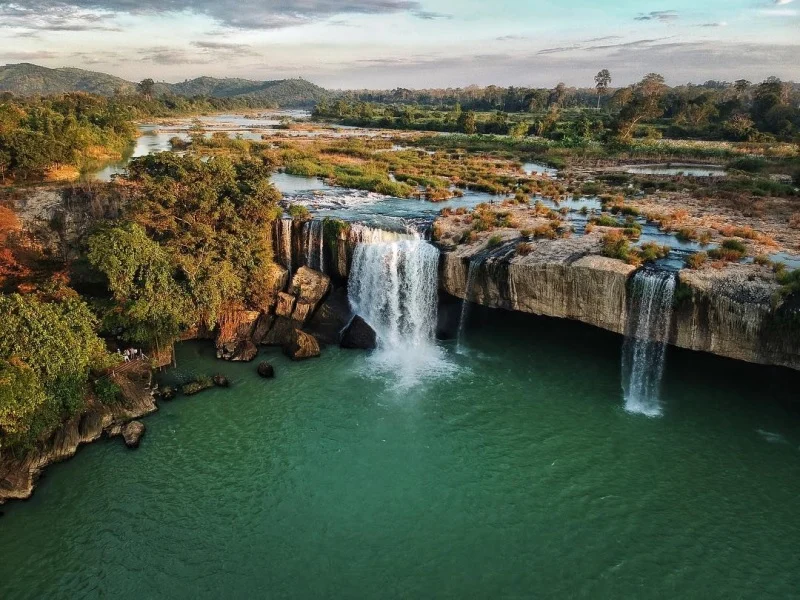
Dray Nur is a sight of staggering proportions, stretching over 250 meters long and plunging from a height of 30 meters.
• The Water Wall: The waterfall creates a massive, shimmering curtain of white foam. In the rainy season (May to November), the flow is at its most aggressive and majestic, sending a cool mist into the air that can be felt hundreds of meters away.
• The Hidden Cave: One of the most unique features of Dray Nur is the 3,000-square-meter cave hidden behind the cascading water. Adventurous visitors can walk behind the "liquid curtain" to enter the cave, offering a surreal view of the world through a veil of falling water.
• The Primeval Forest: Surrounding the falls are ancient trees with massive roots clinging to volcanic rocks, creating a landscape that feels unchanged for thousands of years.

Practical Guide for Visitors
1. Best Time to Visit
• Rainy Season (May – November): Best for witnessing the waterfall’s full power. The scenery is lush and green, though paths can be slippery.
• Dry Season (December – April): The water is clearer and the flow is gentler, making it ideal for photography and picnicking. February and March are particularly beautiful as the surrounding coffee flowers begin to bloom.
2. Activities to Try
• Biking & Trekking: Many tours offer mountain bike rides from Buon Ma Thuot through local villages, ending with a trek along the riverbanks.
• White-water Rafting: For a rush of adrenaline, you can take a boat or raft down the Serepok River to experience the currents firsthand.
• Cultural Immersion: Visit the nearby Kuop Village to see the traditional longhouses of the Ede people, learn about brocade weaving, and taste the famous Central Highlands "Can" wine.
3. Essential Information
• Entrance Fee: Approximately 50,000 VND per person.
• What to Bring: Non-slip sandals or sports shoes are a must if you plan to explore the rocks or the cave.
• The Bridge: There is a suspension bridge connecting Dray Nur to the Dray Sap area. Walking across it provides a panoramic view of the river's dramatic landscape.

Dray Nur is a destination that captures the soul of Dak Lak—it is loud, beautiful, and deeply rooted in the identity of the people who live beside it. Whether you come for the adventure of the caves or the tranquility of the forest, the "Wife Waterfall" remains an essential stop on any Central Highlands journey.